Haryana is one of the wealthiest states in India with kindhearted people. The occupation of the majority of the people is agriculture and dairy. Predominantly, Haryanvi diet is a vegetarian one and they consume a lot of milk and ghee. Haryana is also referred to as ‘The Land of Rotis”.
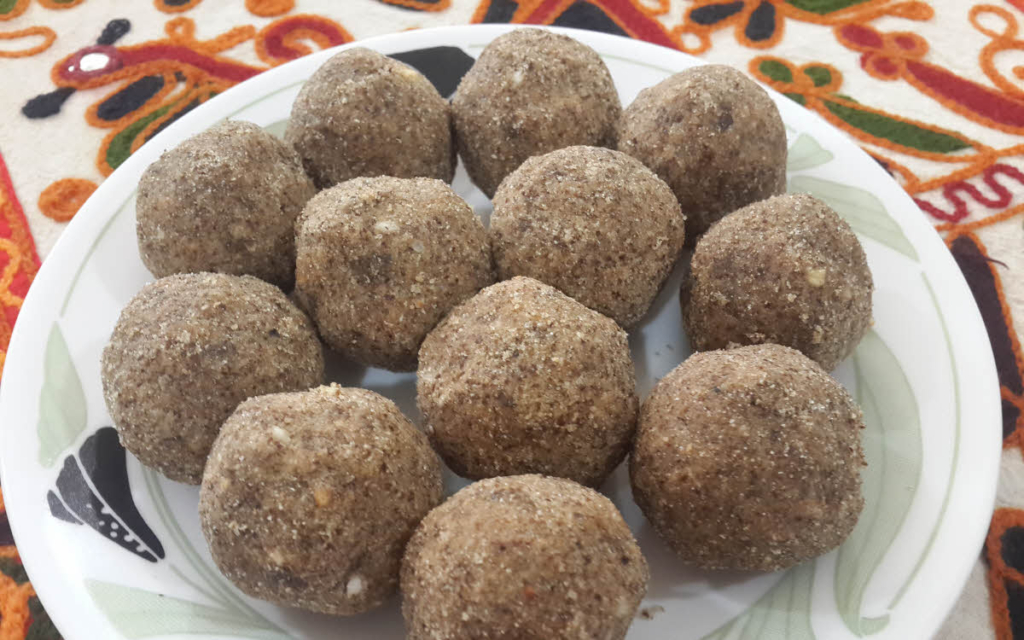
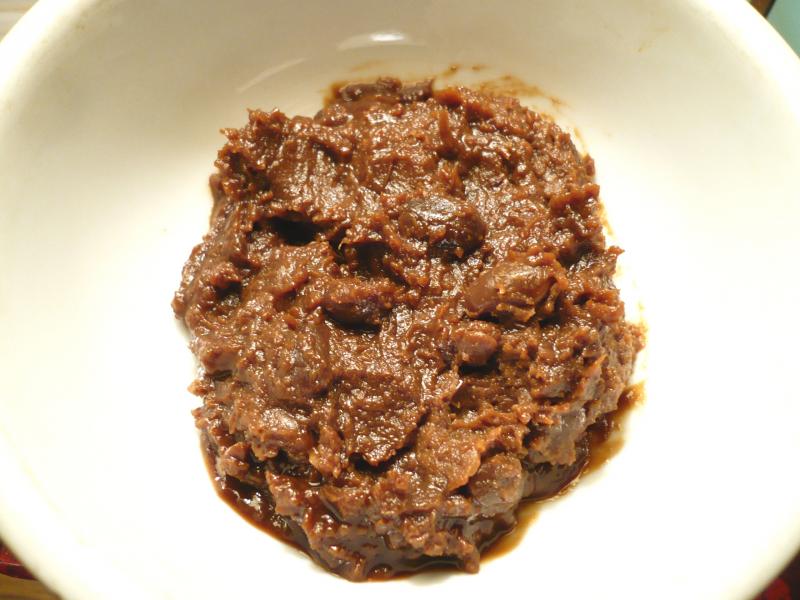
Alsi ki Pinni is prepared with alsi (flaxseed), whole wheat flour, sugar, ghee, nuts and cardamom powder. This sweet is not only delicious but also very healthy. Alsi is high in fiber, omega 3, iron and potassium among others.
Bajra Aloo Roti is prepared with a mix of bajra flour, mashed potatoes, ginger garlic paste, coriander leaves, garam masala. It is served hot with white butter with raita as accompaniments. It tastes heavenly and just melts in the mouth.
Hara Dhania Cholia is a mix of green chickpeas and variety of vegetables. It is prepared with onion, tomato, red chili powder, cumin seeds, coriander leaves and turmeric amongst others. It is a rare and unique combination that is popular in Haryana and is eaten with chapatis or paranthas.
Meethe Chawal or sweet rice are prepared using basmati rice, ghee, and sugar along with some cardamom and saffron. Basmati rice grown in Haryana is the best. The dish is very famous and is served during Basant Panchami festival.Every individual must try it at least once.
Gujarati food is more than just Dhokla. North Gujarat, Kacch, Kathiyawad and Surti Gujarat are the four major regions of Gujarat and each of these bring their own uniqueness to Gujarati cuisine.
Dabeli, Kutch dabeli or double roti is a popularsnack food originating in the KutchofGujarat. Dabeli literally means “pressed” in Gujarati.It is made with mixing boiled potatoes with a special masala and served with chutney, pomegranate and roasted peanuts.
Fafda is a popularGujarati snack. Fafda is usually yellowish in complexion. It is eaten with a chutney and salty fried-green chilis. Jalebi is sweet and crunchy making this sweet-savoury dish a favourite.
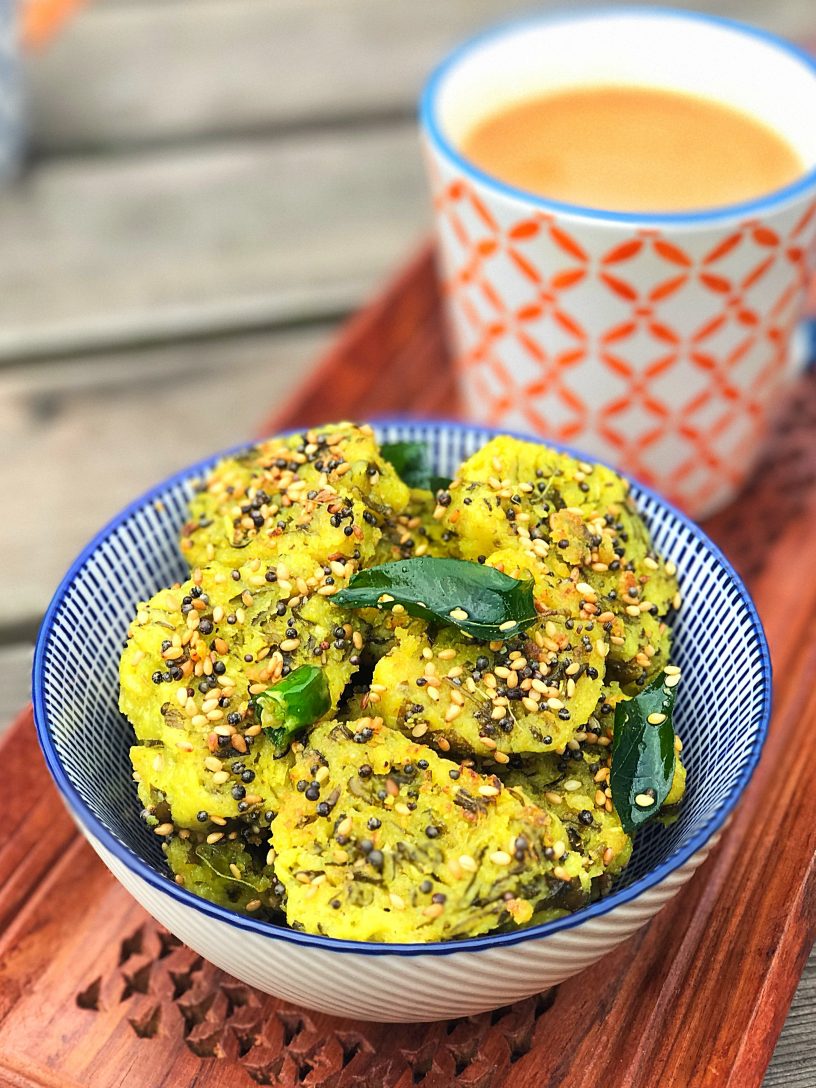
Khaman is a food common in theGujarat , made from soaked and freshly ground chana dal .The final touch to the soft and fluffy khaman is added with a garnishing ofsesame seeds, mustard seeds, coriander leaves. It is a variant of Dhokla and has a lighter colour.
Khichu is a dough for making papad made from rice flour, however, a few other flours are also used. The snack is prepared by cooking flour in water like porridge with cumin seeds and an alkaline salt known as Papad Khar.The name khichu is derived from the ductile nature of the dough.
Khandvi consists of yellowish, tightly rolled bite-sized pieces and is primarily made of gram flour and yogurt. Khandvi is readily available across India and is commonly eaten as an appetizer or snack and is served with garlic chutney.
Muthia is a staple of Gujaratis.The name is derived from the way it is made, from the ‘gripping’ action of the hand. Muthia assembles a shape of sausage. The inclusion of fenugreek makes Muthia good for bowel movement.
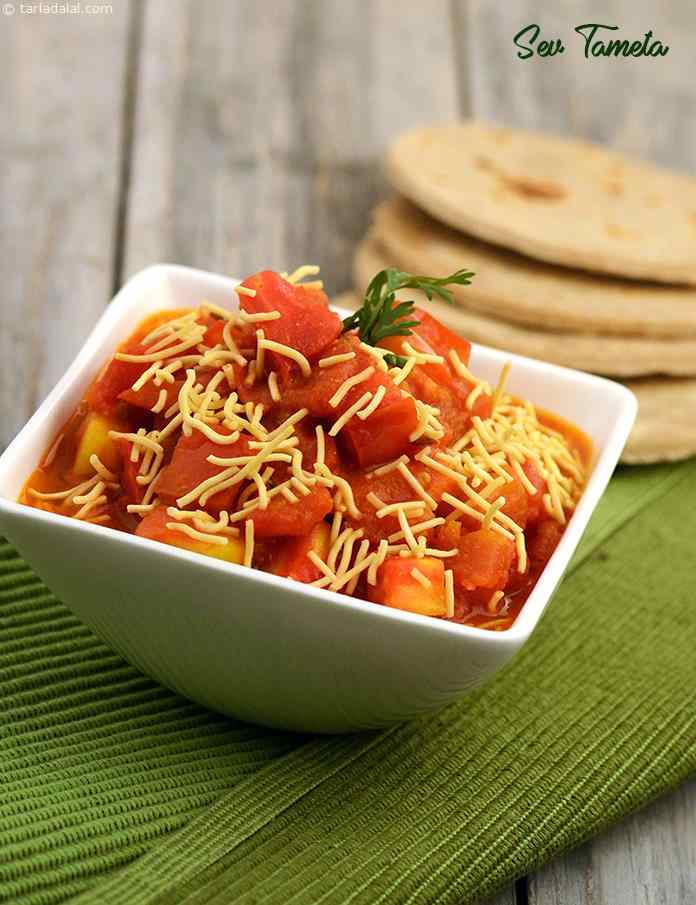
Sev Tameta is made using juicy tomatoes served with heaps of besan sev. The gujrati version of the dish is a bit sweeter with the inclusion of jaggery.
Goa is popular not only for its beaches, parties and nightlife, but it also has some superb street foods. Street food in Goa excels in all aspects and there is no denying to the fact that street food both South Goa and North Goa is lip-smacking.
Bebinca is a type of pudding and a traditional Indo-Portuguese dessert. Traditional Bebinca has seven layers. The ingredients include plain flour, sugar, ghee, egg yolk, and coconut milk. It is a traditional sweet of Goa .It is also easily available to carry and preserve for a long time or eaten fresh.
Chorizo Pav is a famous delicacy in Goa. Locals enjoy it as a breakfast item or even as a tea-time snack. Eaten with bread, this spicy pork meat preparation is made using a pre-cooked sausage, onions and potatoes.
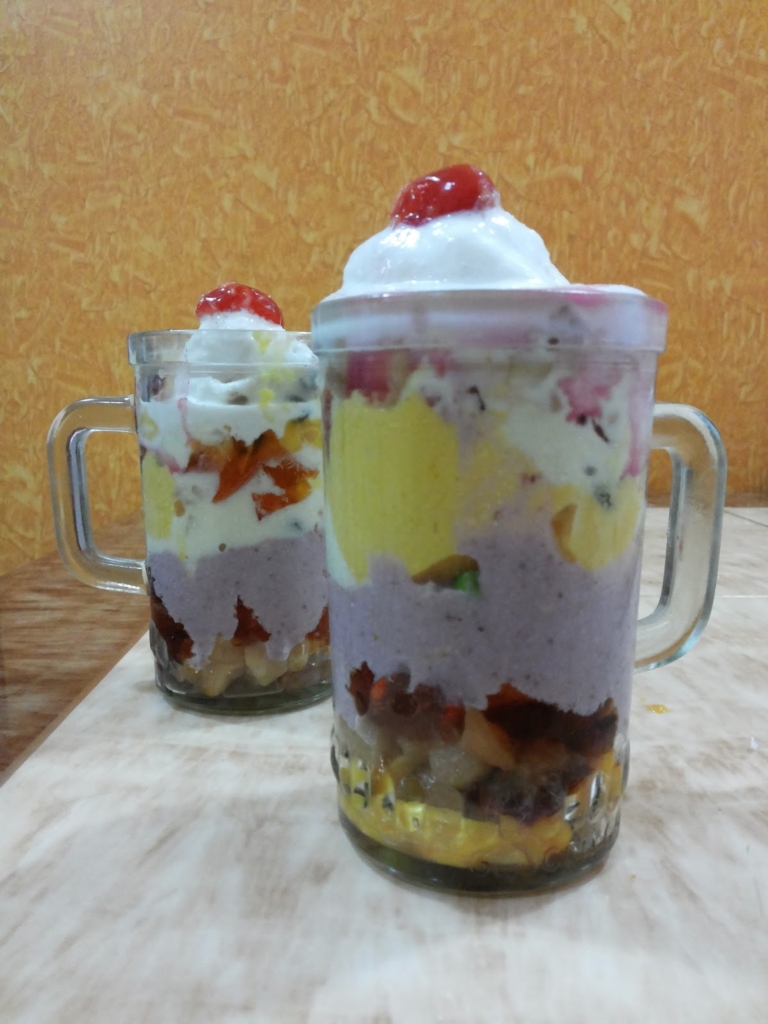
Gadbad Ice Cream , Goan’s favourite is served in a tall glass or bowl. It is a combination of different ice creams served in one serving, topped with noodles and jelly. The perfect summer special everyone will enjoy the Gadbad Ice Cream on a hot summer day.
Vindaloo represents the diverse culture of Goa. One of the most popular street foods in the state, it is known for its spicy flavors enriched with vinegar. Made with boneless pork, a variety of Indian spices are added to the dish to make its taste memorable, including cloves, cumin, cinnamon, Kashmiri pepper and many others
Ras Omelette is a regular omelette served with some chicken curry.It is garnished with coriander, onions and a dash of lime juice sprinkled on top of the completed dish and has omelette dipped in it.
Being a state which produces staple food in abundance, a great part of the foods of Chhattisgarh consists of the staple crops such as Rice, Bajra, Jawar. The food of Chattisgarh is mostly inspired from its neighboring states.
Aamat is considered as the Sambhar of Bastar region . This delectable delicacy is prepared with mixed vegetables which is cooked along with the ginger garlic paste and various spices to enhance the flavor of the dish. Traditionally, the dish has been prepared in the bamboo shoots.
Bara is a unique variant of the Vada. Bara is basically a light snack which is made from fermented Urad Dal . Various vegetables and spices are added along with the fermented lentils to add perfection to this famous dish of the state. The minimum oil usage makes Bara super light and super healthy to eat.
Chilla is also known as Chhattisgarhi dosa.It is made up of rice flour and Urad dal. An official dish of morning or evening served with different types of chutney with no filling inside the chilla.
Fara is a dish made up of rice flour, cooked in steam and then shallow fried. This dish has to be served with complimentary green chutney or even sauce can work. Fara are made in the form of dumpling .
Sabudana ki Khichdi is one of the most healthy and delicious dishes of Chhattisgarh. Sabudana Ki Khichdi is prepared with the soaked Sabudana balls. To add the flavor to the dish, vegetables and spices are added that provides a delicious taste to the plate.
The cuisine of Bihar is largely similar to North Indian cuisine but has influences from other East Indian cuisines especially Bengali cuisine. The scrumptious and exotic Bihari dishes are highly capable of tingling the taste buds of every food connoisseur.
Khaja is deep fried in oil and the ingredients use is wheat flour, sugar, mawa. It is very crispy. It tastes amazing when it melts in the mouth and its wafery texture makes it very tempting. It is known for its puffiness.
Laung latika is a traditional dessert of the food of Bihar. At the centre is clove which makes it stand apart from the others. The pungent taste of the clove with the sweet stuffing dipped in sugar-syrup melts in the mouth. The complex amalgam of tastes altogether makes Laung Latika exclusive to Bihar.
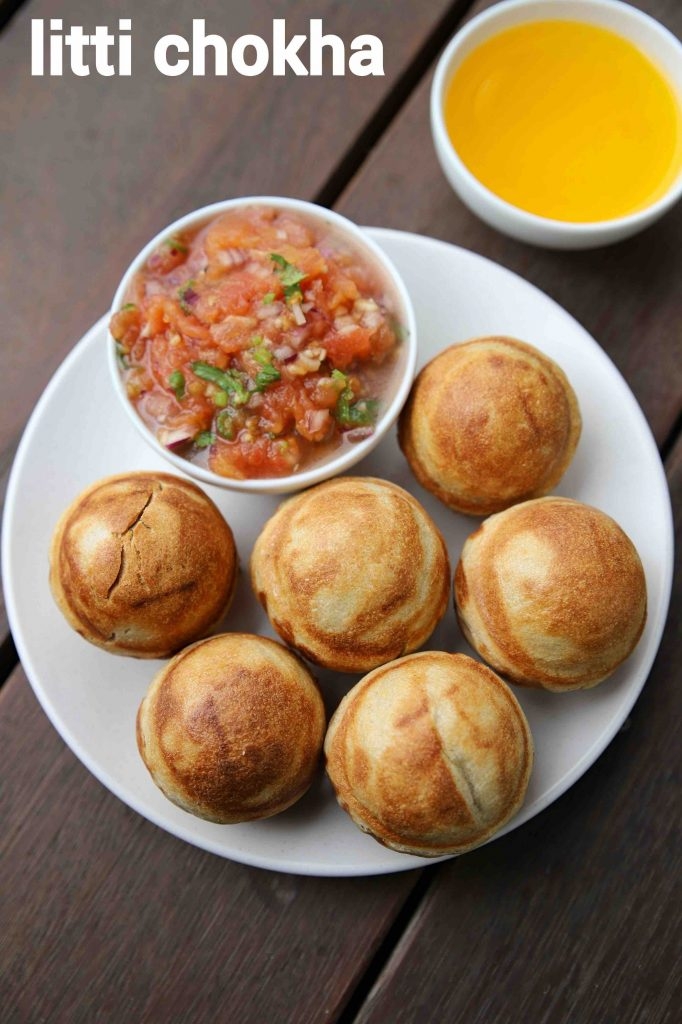
Litti Chokha can be considered as the dish of Bihar. It was started as a meal of poor and then was sold on carts on the street Chokha is prepared by mashing boiled vegetables ,adding spices and chopped onion, garlic etc and served with Litti as a complimentary delicacy.
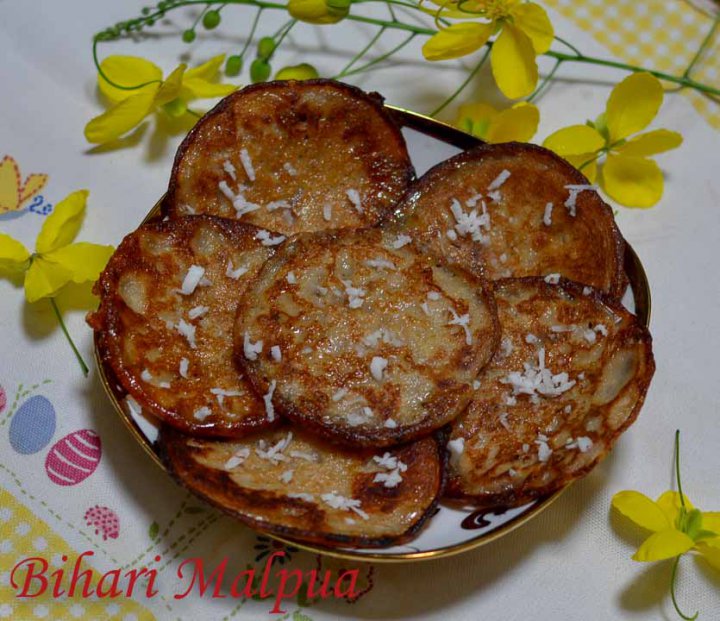
Malpua is a popular dessert sweetmeat that can be found in Bihar.It involves mixing flour, milk, sugar and mashed bananas and deep frying them so that the edges get crispy while the centre is still soft.
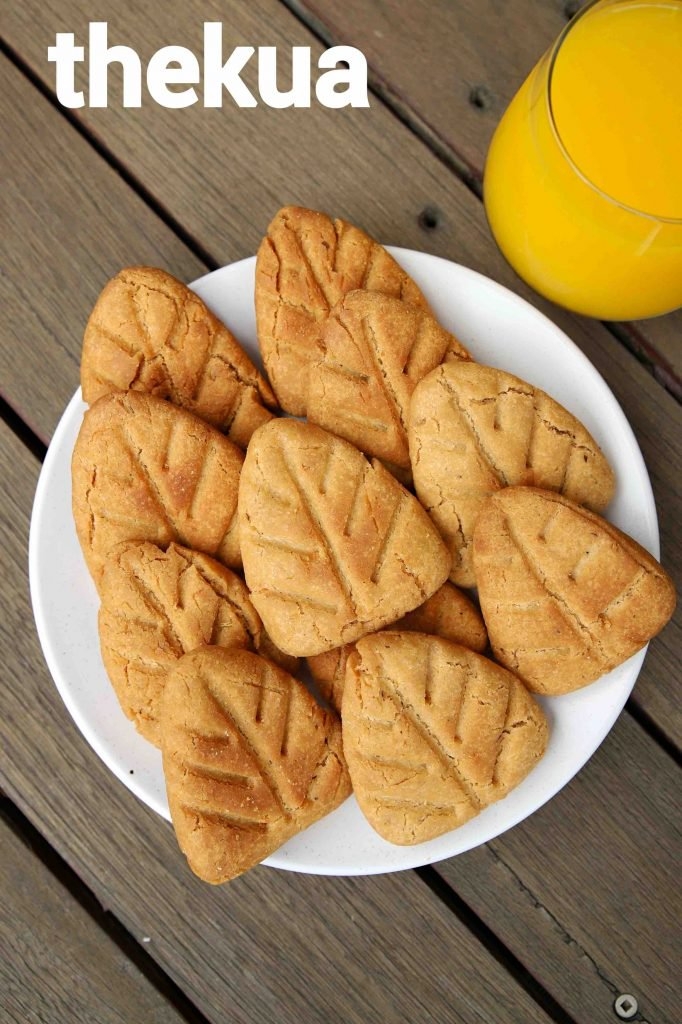
Thekua is the most commonly prepared snack of Bihari food. It is a mixture of wheat flour and jaggery .One can also use rice flour instead of wheat flour and sugar instead of jaggery to make different varieties of Thekua.
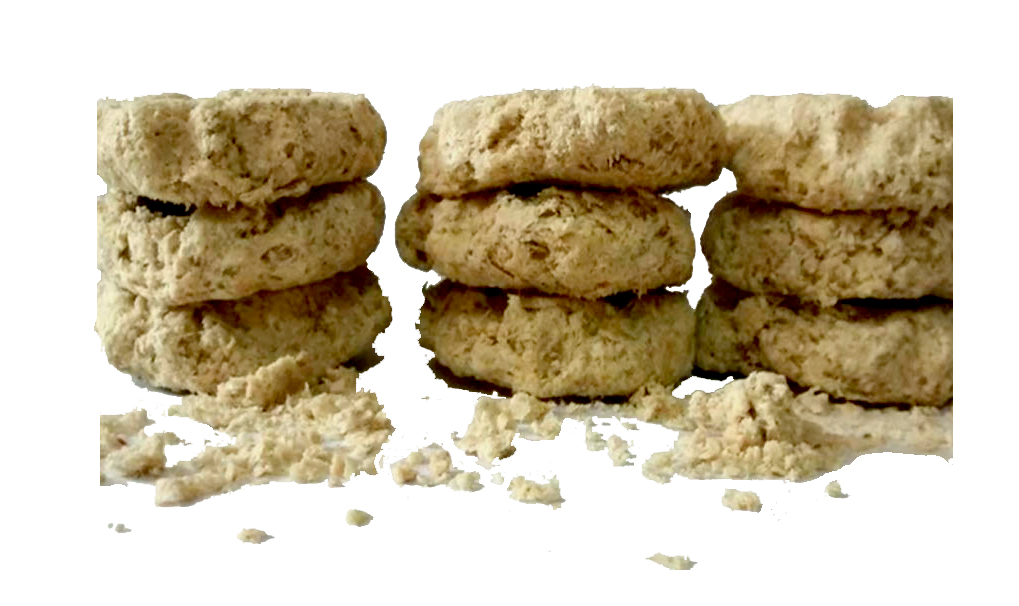
Tilkut is made from sesame seeds and jaggery makes its taste more flavored. Tilkut is cooked with a sugar base rolled into a ball filled with copious amounts of crushed sesame seeds. The tilkut gets tastier, softer with sesame seeds.
Assam offers just the right kind of flavours to tickle your taste buds. With a wide variety of indigenous food to offer, Assamese food is famous for its distinct flavoring and influences. Delicious pork, chicken and mutton dishes are a must try.
Baanhgaj or Lagot Kukura is essentially chicken cooked with bamboo shoots and lentil.The dish goes well with rice and it can be garnished with chopped green chillies and onions.
Khaar is truly a unique Assamese preparation. Khaar is a heartwarming dish made with vegetables and pulses and the main ingredient being meat, fish or even duck. Even dried banana leaves which imparts burst of unexpected yet refreshing flavors.
Lucchi is prepared by deep frying a roti made up of white flour, without making it crisp. It is served with a delicious potato curry. Lucchi is also known as Poori in other parts of the country.
Masor Tenga is slow cooked fish with a broth made from outenga, tomatoes, and lemon and offers an extremely tangy refreshing flavour once done. Every Assamese definitely loves Masor Tenga.
Payash is made using Joha rice and is loaded with ghee, dry fruits, and milk. Cooked on a low flame, one can also add cardamom and saffron for garnishing the dish. Overall, it is a must try dish for all those with a sweet tooth.
Arunachal Pradesh street food differs from tribe to tribe. As one move toward the eastern side of Arunachal people are dependent on bamboo and other leafy vegetables which are strictly boiled. Fried food is not as popular as people like to eat either boiled or smoked food.
Apong is a type of rice beer, which is traditionally prepared by tribes of Arunachal Pradesh.India. Apong is prepared by fermenting rice. The two types are Nogi Apong and Poro Apong.The two apongs differ in their taste and colour.
Chura Sabji is a kind of curry made of fermented cheese made by either yak milk or cow’s milk and not to forget the most important the flakes and a few pieces of the King chilly which makes it spicy but delicious.
Lukhter is another delicacy of the Arunachal Pradesh.Lukter is a combination of cooked dry meat and chilli flakes from the King chilly or Bhut Jolokia. Like the norm goes with Aunachal, this is a side dish meant to be eaten with rice.
Pehak is made by use of fermented Soybean and King chilly. In this dish, the king chilli is used as the main ingredient. It is also used as a side dish with rice. The pickle is hot and very spicy that gives the rice a very unique hot flavor. Pehak is very popular among Arunachalis.
Pictures sourced from various sources on internet. Please contact for credits.
Traveling makes everybody a better person. We end our adventure happier than we started off. Travel makes one a better individual as well as a more interesting one as well. This makes one type of a person people float towards and want to associate with them. Following are some approaches to become a better person while having enjoyable travel experiences :
1. Happier Travels
Travel tells you the best way to be cheery. You’ll end up being free, progressively sure and believe them to be an increasingly impressive spot. Being neighbourly, entertaining, social, cheery, certain are generally attributes that make people progressively productive in a standard day by day presence. Travel improves people. When you get acquainted with the world , push your cutoff points and try new things become an undeniably open, cheerful, and incredible person.
2. Say no to materialism
All over the place, you adjust precisely how little stuff you truly need. You’ll comprehend that the stuff they sell at the mall is totally useless in life. Returning home, you’ll get yourself a moderate just in light of the fact that you comprehend what you need to live and what you don’t.
3. Easy going attitude
Simply take the path of least resistance. Continuously be loose and accommodating while at the same time voyaging. Travel might most likely show new something new when you are calm and willing to realize what ‘s out there
.4. Become sharp and smarter
While voyaging you’ll get some answers concerning people, history and culture and arcane convictions about spots a couple of individuals could simply dream about. To put it doubtlessly, you’ll have a predominant understanding about how it capacities and how people continue. That is something that can’t be picked up from books; you can simply lift it up without and about experience.
5. Adapt to the Environment
Various places have various foods and encompassing. Regular voyages make you increasingly versatile to new places like attempting fiery nourishment, encountering an entirely different world. Venture out of your customary range of familiarity to encounter.6. Be confident while travelling
In the wake of voyaging so much and achieving so much, you’re going to feel significantly increasingly positive about your capacity to accomplish anything you set your focus on. In this way, as you banter with an ever increasing number of outsiders your confidence normally develops.
7. Be good at ConversationsTravel does not simply fulfill you with chatting with outcasts, it improves you at it also. Unavoidably, you couldn’t think less about where people are from, where they are going, to what degree they’ve been voyaging.
8. Be more social
You ought to be progressively open to individuals. You figure out how to make new companions and get progressively agreeable to outsiders. Make sense of how to make new buddies and get continuously content with bantering with new people.
This photo series highlights best of street food items from different regions in India. First is Jammu.
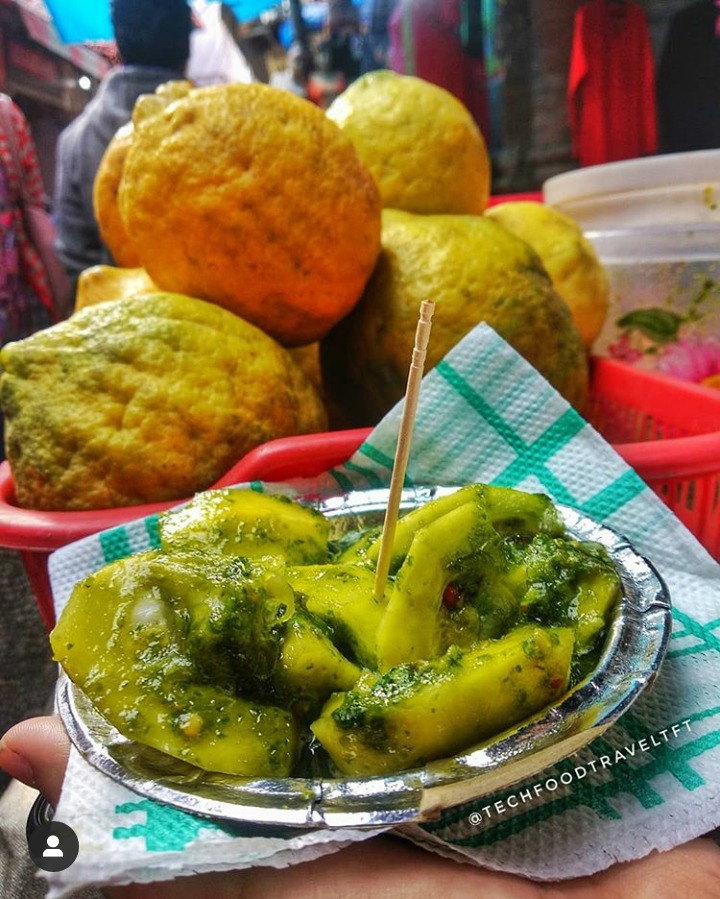
Kimb a citrus fruit is skinned, juice & seeds squeezed out and then mixed with spices, salt, bit of sugar etc. A sweet, sour and spicy snack commonly prepared in many homes, but rare to find it for sale.
2.
Bhijja Kulcha with Rajma (kidney beans). World’s best Rajma are grown in Jammu and this is evident in the number of Rajma dishes available in region. Another popular dish is Raajma Chawal served with mango pickle, chutney and clarified butter on some food shops on NH1 near Banihal.
3.
Pattode, made with Colocassia Leaves. These are made in many parts of northern India. But each region has it’s own flavours.
4.
Chana Kulcha, a very popular snack food item sold by street food vendors outside schools. Now there are a few other versions of it, like one with soyabean.
5.
Kaladi Kulcha . Kaladi is a dense, salted cheese very popular in most parts of Jammu. It may have a bit of fungus on it which gives it a unique flavour. Eaten by heating on a pan with little oil and addition of salt, sauce or spices. It can be eaten with or without the bun.
6.
Kachalu chaat. Another very popular street food snack for school children. Made of Taro rootstock and mixed with a wide variety of spices like tamarind, chilli, rock salt, pepper and more. Different places have different flavours.
7.
Bhalla. Though this dish is quite common in most of northern India. But residents of Jammu just love these bhallas sold by small vendors in a few bus stands in southern border of Jammu. Served with spicey chutney and radish.
Source: Pictures from various sources on net. Please contact for credits.
Fever Tree, one of premium natural mixer brands held an event launching their premium brand, Robert Parker. The event was hosted by British High Commissioner Sir James Bevan. British deputy PM, Mr. Nick Clegg was guest of honour for the event.
POST RELEASE
New Delhi, 25th Aug 2014: The age of the dismal mixer is over with the introduction of Fever-Tree (The Premium Natural Mixer)in India. The capital witnessed the sophisticated launch of the iconic super premium brand Fever Tree, The World’s Best Tonic Water – Robert Parker. Making its foray into the Indian Market, this is the first venture of the company in the subcontinent and it has made headline for bring Indian Tonic Water back to India.
Fever Tree Bar
The event was hosted by The British High Commissioner Sir James Bevan in honour of British Deputy Prime Minister Mr. Nick Clegg’s visit to India. The event was attended by Mr. Tim Warrillowm (co-founder & Director Fever Tree) and Mr. Anuj Kushwah (Managing Director Kaama Impex Pvt. Ltd) who is the importer & distributor for the Fever-Tree Brand in India. An exquisite evening of luxury, delight and splendor, the event celebrated amongst the crème de la crème of Delhi.
Proudly served in 7 of the top 10 restaurants in the world Fever Tree is one of the most premium and iconic brand coming out of UK. India is the 50th export market for Fever-Tree. Fever-Tree was recently named Tonic of choice in an independent survey of the world’s leading bars and restaurants
Mr. Anuj Kushwah, Managing Director of Kaama Impex Pvt Ltd says “Every decision we take at Kaama is keeping in mind the consumers needs and experiences, hence the choice of bringing Fever Tree to India. Fever-Tree is an iconic brand and we are proud to launch in India.”
This August, Fever-Tree, the premium natural drink mixer company, will launch their Indian Tonic Water in India, the home of Gin & Tonic and the brand’s 50th export market. The British company, which sees 70% of sales come from export, is looking to continue its dramatic rise and commitment to bringing consumers the perfect gin and tonic wherever they are in world.
Fever-Tree will travel as part of a UKTI delegation led by Deputy Prime Minister Nick Clegg across India. As part of the government policy to boost British export and David Cameron’s commitment to increase trade to £1trn by 2020, the trade envoy will hold events in Delhi, Mumbai and Bangalore from 25th -28th August.
Founded in 2005, Charles Rolls and Tim Warrillow identified a need for premium mixers to accompany the fast growing array of superior spirits available on the market and travelled from the Congo to the Ivory Coast in pursuit of the highest quality ingredients. Fever-Tree now has a range of 14 natural mixers and an annual company turnover of £25 million.
Fever Tree – Taj Display
Tim Warrillow comments: “We are delighted to bring premium quality, full flavoured Indian Tonic Water back to the birthplace of the gin and tonic. In 1820, the Malaria-plagued British Army in India inadvertently created the cocktail by mixing their regular dose of quinine with sugar, water and local fruits and of course their daily ration of gin. We have been championing the gin and tonic boom across Europe over the past years and will now, almost two hundred years later, return an all-natural premium tonic water back to its spiritual home.”
Charles Rolls comments: ‘India is now one of the five largest gin markets in the world and will provide us with a long-term platform for growth. Traditionally a whisky market, white spirits have grown in the region in recent years and we hope to capitalise on the popularity of Western drinking habits in bars, restaurants and hotels.”
Since its launch, Fever-Tree has collected a vast number of awards, including the Queen’s Award for Enterprise, Exporter of the Year at The Grocer Gold Awards, and the Ernst & Young Entrepreneur of the Year for London and the South. For the third year, Fever-Tree was earmarked by The Fast Track 100 as the fastest growing non-alcoholic drinks company in the UK and included in the highly respected list.
About Fever-Tree
Founded in 2005, the company is one of the UK’s fastest growing companies with a turnover of £25 million in 2013.
Fever-Tree sources the world’s finest ingredients from natural sources, including quinine from the Democratic Republic of the Congo, ginger from the Ivory Coast, India and Nigeria, and lemons from the slopes of Mount Etna, Sicily.
Fever-Tree has a portfolio of 12 mixers which are available to buy in the UK from Sainsbury’s, Tesco and Waitrose.
Fever-Tree products are served in the most prestigious venues across the world, from Claridges in London to Raffles in Singapore and the Burj Al Arab in Dubai.