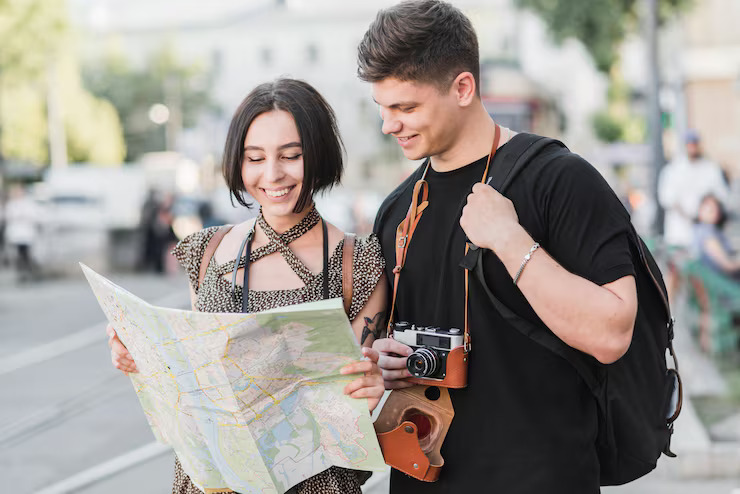
This article is meant to be a brief India travel guide for tourists who need some information about means of transport in India . Anyone traveling to India for the first time is sure to be overwhelmed by the diversity of cultures, languages, people, food, climates and almost everything else. It isn’t possible to write a comprehensive India travel guide which can cover even a fraction of what a tourist may encounter in India. We aim to cover as much vital details as possible without drowning the reader with too much information. We have already posted some India travel guides on this website,:
This guide intends to cover some of the general issues related to transport and travel in India. So let’s begin with :
Travel by trains in India
India has the biggest system of railway lines on the planet and the service is very good, if not excellent. Traveling in India on via train gives you the chance to explore India in detail and in general is cheaper than domestic air travel. Train travel in India offers good connectivity all over India for people with all kind of budgets .For someone with an inquisitive and open mind, it’s a great way of meeting all kinds of Indian people belonging to different regions and classes. There are different types of trains with different levels of service catering to people with different budgets and needs. Trains like Rajdhani, Shatabdi are air-conditioned, fastest in India and provide meals. There are other trains like Duronto, Garib Rath, various Express and other trains which offer varying levels of service at different prices.
Apart from that, there are some luxury trains Palace on Wheels, Maharajas’ Express, The Golden Chariot and a few more. These trains are run jointly by Indian railways and tourism ministries of different states in which they operate. Journeying on these trains covers all aspects of transport, food, lodging and sightseeing. Service and level of comfort offered is among the best in world
One major drawback of trains is that it can prove difficult to procure tickets. Another one are the delays which can happen frequently on long routes. If you are very tight schedule, relying on trains for your India journey can backfire.
Inter-city or inter-state travel in India by Bus
In India, travel by bus is 2nd most popular way of cheap travel and in some cases, the only way of public transport to reach places like Manali, Laddakh etc, not yet connected by train network. There are different types of buses available on budget of the traveler. Ordinary buses are usually very crowded and it’s not possible to reserve tickets. They don’t have any air-conditioning or comfortable seats either, But they are very cheap as even a 5 hour journey may cost only Rs 100. Then there are luxury buses with better seats which may or may not have air-conditioning available. They are generally more comfortable and price for a 7-10 hour journey may vary between Rs 300 to Rs 800 for different places and operators. Tickets in air-conditioned buses cost around 1.5 times to double for same kind of seats.
Apart from these, there are luxury buses operated by private as well as government which offer maximum comfort at slightly higher prices. These buses are usually supplied by Volvo or Mercedes and have more comfortable seating arrangements than the rest.
Travel by Car
Connaught place, Delhi
A car with driver is the most comfortable and safest way of travel in India.It is possible to get a car on rent and drive it yourselves, if you have necessary paperwork, but Indian roads are too chaotic for a foreigner. It’s better to hire a driver along with the car. Salary for driver is about Rs. 150-300 per day which is included in rent for the car and you don’t have to pay for his food or lodging. Different varieties of vehicles have different rent prices and they vary between Rs 8 per km to Rs 20 per km for most models which include Ambassador, Tata Indigo, Toyota Qualis and a few others.
Renting a car is a good option for various reasons as you have much more flexibility and don’t have to worry about following a strict schedule or missing a train or worry about tickets. Having a good driver who can communicate well also means that he can help you with finding good hotels, restaurants and other amenities easily. But be wary of drivers who act as touts. A majority of them try to take tourists to businesses which offer them commissions. It isn’t exactly illegal, but tourists should evaluate their choices before making decisions. They should make sure that they are getting good value for their money for the services availed.
Travel by motor-bikes
Using a motorbike (motorcycle) can be a great adventure if you are up to driving on dangerous roads. Royal Enfield is the most popular brand for motorcycle enthusiasts in India. It’s less fuel efficient but is powerful enough for most Indian roads including those on mountains. Motorcycles with engines of 100 to 220 cc are more common and cheaper and cam offer a mileage of 40kmpl to 70 kmpl depending upon various factors. It is possible to rent or buy new or used motorcycles. Rental cost per day for bikes vary between Rs 600 to Rs 1500 in different places for different bikes. While buying, it’s advisable to go for 2nd hand bikes which may cost anything between Rs 12000 to Rs 40000.
Travel in Indian cities by auto-rickshaws (tuk-tuk)
Auto/ tuk-tuk/three-wheeler is a good albeit slightly uncomfortable choice for short-distance travel inside Indian cities. Due to their small size, they can dodge traffic rush easily but have slow speeds which is actually good due to less safety features. Before getting in to an auto, always confirm with driver about fare. They’ll either go by distance covered on meter or ask for a flat fare. It’s different in different cities. Rest precautions are similar to those followed while hiring taxis anywhere in the world.
Well, this is gist of what a tourist should know about various modes of transport while traveling in India. We hope that it proves useful for some people. Email us at info@indiafoodtour.com or use this contact form for feedback or more information.
When it comes to food, Maharashtra will never disappoint you. From the world famous pav bhaji to the delicious bhelpuri, Maharashtra has a lot to offer to food lovers. It is food heaven for both vegetarians and non vegetarians alike. Basundi is a sweet dish made in Maharashtra. It is condensed by boiling the sweetened milk on low heat which gives it a nice flavour. Sugar, cardamom or saffron is added to augment the flavour and texture. Different types of basundi are custard apple basundi and angoor basundi. Bhelpuri is a savoury snack common in Maharashtra.It is a mixture of puffed rice, chopped onions,chopped tomatoes,tamarind chutney. Bhelpuri can be served in a lot of ways, but usually it is served on a paper which is folded in the form of a cone and is consumed using a paper spoon. Misal pav has a spicy and tangy lentil curry which is made with moth beans and is served with Pav bread. At times, it is eaten with yoghurt to lessen the spice.It is decorated with a slice of Lemon and Onion Coriander sprinkled on it. This street food is readily available at any street food joint and served hot. Modak is extensively eaten during the Ganesh Chaturthi Festival all around the state. The sweet filling is made up of fresh-grated coconut and jaggery, while the soft shell is made from rice flour, or wheat flour mixed with maida flour. The dumpling can be fried or steamed. Pav Bhaji is one of the spiciest, vegetarian dish. It is a mixture of boiled vegetables along with a lot of Spices and Onion Coriander mixture for garnish.Fresh and thick slices of bread, smothered in butter served with a delicious mix of moderately spiced vegetables. Vada Pav is the most favorite snack in Maharashtra.It is Potato Bhaji ball dipped in Besan Flour and fried in hot oil. It is stuffed in Pav with Garlic Chutney and fried Chilli. VadaPav is super delicious when served hot- hot spicy and slight crunchiness. It is also known as ‘INDIAN BURGER’.
Goa is popular not only for its beaches, parties and nightlife, but it also has some superb street foods. Street food in Goa excels in all aspects and there is no denying to the fact that street food both South Goa and North Goa is lip-smacking. Bebinca is a type of pudding and a traditional Indo-Portuguese dessert. Traditional Bebinca has seven layers. The ingredients include plain flour, sugar, ghee, egg yolk, and coconut milk. It is a traditional sweet of Goa .It is also easily available to carry and preserve for a long time or eaten fresh. Chorizo Pav is a famous delicacy in Goa. Locals enjoy it as a breakfast item or even as a tea-time snack. Eaten with bread, this spicy pork meat preparation is made using a pre-cooked sausage, onions and potatoes. Gadbad Ice Cream , Goan’s favourite is served in a tall glass or bowl. It is a combination of different ice creams served in one serving, topped with noodles and jelly. The perfect summer special everyone will enjoy the Gadbad Ice Cream on a hot summer day. Vindaloo represents the diverse culture of Goa. One of the most popular street foods in the state, it is known for its spicy flavors enriched with vinegar. Made with boneless pork, a variety of Indian spices are added to the dish to make its taste memorable, including cloves, cumin, cinnamon, Kashmiri pepper and many others Ras Omelette is a regular omelette served with some chicken curry.It is garnished with coriander, onions and a dash of lime juice sprinkled on top of the completed dish and has omelette dipped in it.
Being a state which produces staple food in abundance, a great part of the foods of Chhattisgarh consists of the staple crops such as Rice, Bajra, Jawar. The food of Chattisgarh is mostly inspired from its neighboring states. Aamat is considered as the Sambhar of Bastar region . This delectable delicacy is prepared with mixed vegetables which is cooked along with the ginger garlic paste and various spices to enhance the flavor of the dish. Traditionally, the dish has been prepared in the bamboo shoots. Bara is a unique variant of the Vada. Bara is basically a light snack which is made from fermented Urad Dal . Various vegetables and spices are added along with the fermented lentils to add perfection to this famous dish of the state. The minimum oil usage makes Bara super light and super healthy to eat. Chilla is also known as Chhattisgarhi dosa.It is made up of rice flour and Urad dal. An official dish of morning or evening served with different types of chutney with no filling inside the chilla. Fara is a dish made up of rice flour, cooked in steam and then shallow fried. This dish has to be served with complimentary green chutney or even sauce can work. Fara are made in the form of dumpling . Sabudana ki Khichdi is one of the most healthy and delicious dishes of Chhattisgarh. Sabudana Ki Khichdi is prepared with the soaked Sabudana balls. To add the flavor to the dish, vegetables and spices are added that provides a delicious taste to the plate.
Tourism in India is a tale of amazing potential, confusing paradoxes, missed opportunities and massive under utilisation of resources. Compared to rest of the tourist hotspots around the world, India has mind boggling variety of tourist attractions of all types which can attract almost every single type of tourist out there. Ancient archaeological heritage of India which goes back to nearly 4000 years is spread all over India, from Laddakh to Kanyakumari. India is blessed with such awe inspiring ancient monuments at a scale unrivaled by any other country in the world. Forts of Rajput rulers in Rajasthan, artful temples of Bundels, luxurious monuments constructed by Mughals, amazingly beautiful Konkan temples are just a small fraction of this wealth spread across it’s length and breadth. Adventure tourists have some of the best and virtually untouched destinations in Laddakh, Himachal Pradesh, Uttranchal, Sikkim, Mizoram and other north-eastern states . Wild life enthusiasts have the option of seeing some of the rarest wildlife not found anywhere else in world in Gir, Jim Corbett and many other national parks. Adventure tourism, specially in north-eastern states has a lot of potential but hasn’t been explored even partially. The north-eastern states states have some of the best places for adventure activities like trekking, mountain climbing, camping and much more. Culinary tourism in India which has the biggest potential is just a small speck. Considering the vast culinary diversity of India, the country should be the top destination for all foodie tourists. So many religions like Hinduism, Sikhism, Jainism and Buddhism originated in India and their followers from all over the world wish to visit places important to their faiths. Medical tourism in India due to high quality healthcare at very low prices attracts people from all over the world. Culture and food junkies can’t find any place better than India with it’s diversity in languages, people, food, music, literature and culture which go back thousands of years. To top that, India is one of the cheapest tourist destinations compared to most of western countries. There is no other country in the world which offers so much diversity in such a package. Anyone would think that with so many blessings, India would be the tourist hub of the world. To top it all, India is one of the cheapest destinations in the world for tourists. In 2011, 62 lakh foreigner tourists arrived in India. Tourism sector in India employs nearly 4 crore people and is $ 121 billion dollar industry. Seems impressive, only till compared to 2.5 crore tourists per year Malaysia which has little to offer except beaches and and cheap shopping. Top tourist destination in world is France with 8.2 crore tourists in 2011 and 8.3 crore in 2012. India is not even in top 10 tourist destinations in world or even Asia. It’s actually ranked 38, preceded by countries like Saudi Arabia, Thailand, Egypt and even Tunisia. Just for sake of perspective, go through the following list: ( 1 million = 10 lakh, 100 lakh = 1 crore) Country No. of tourists Turkey 3.5 crore Morocco 92 lakh Tunisia 69 lakh South Africa 80 lakh China 5.8 crore Saudi Arab 1.7 crore Egypt 94 lakh Thailand 1.9 crore Looking at these figures, one can’t help but wonder what is wrong with Indian tourism sector. It’s not that people around the world are unaware of what India has to offer. Established travel forums like TripAdvisor and Lonely Planet are full of foreigners discussing and asking for information related to travel in India. Sections related to India are the ones with maximum number of posters. On Tripadvisor, India section has more than 10000 threads, exceeded only by 15000 threads of Thaliand. A lot people from all over the world wish to visit India but are turned away by numerous factors. Some of such issues are: 1) Complicated visa procedures: Infamous Indian red tape and bureaucracy is a nuisance outside the country too. Unlike other tourist hotspots, India makes it much more difficult and expensive for tourists to get a visa. India offers on arrival visa to only a handful of countries including Finland, Japan, Luxembourg, New Zealand and 4-5 others. In comparison, Malaysia offers on arrival visa to majority of countries except Israel, India, China and some African countries. 2) Bad infrastructure : Even though rapid development is happening, India is still a long way from having a world class tourist infrastructure. 3) Safety : Image of India has taken a severe beating recently due to various factors. Pakistan sponsored terrorism in various parts of India is also a big turn 0ff. 4) Lack Of Promotion Unlike other countries where governments and private organisations, spend large amounts of money and effort to promote tourism in their own countries, Indian efforts in this case have been very limited. Incredible India campaign which was launched with much fanfare a few years back ran out of steam pretty quickly. Above mentioned points are not unique to just India. A lot of countries face similar problems, have very little tourist attractions but still manage to attract many more tourists than India. We need to learn from them and make necessary changes as soon as possible. Some recent high profile projects like Golden Quadrilateral Highway project, Delhi Agra expressway, high speed trains with bio toilets etc are steps in right direction. But a lot more needs to be done. A lot of our customers are solo travelers, men and women of all ages. Some of them spend months or even years traveling inside India without facing any problem. But the recent bad press and selective reporting has messed up image of India badly. In an industry where perception counts for a lot, an effort has to be made to promote the attractions and good points of India rather than just the bad news. Development
The cuisine of Bihar is largely similar to North Indian cuisine but has influences from other East Indian cuisines especially Bengali cuisine. The scrumptious and exotic Bihari dishes are highly capable of tingling the taste buds of every food connoisseur. Khaja is deep fried in oil and the ingredients use is wheat flour, sugar, mawa. It is very crispy. It tastes amazing when it melts in the mouth and its wafery texture makes it very tempting. It is known for its puffiness. Laung latika is a traditional dessert of the food of Bihar. At the centre is clove which makes it stand apart from the others. The pungent taste of the clove with the sweet stuffing dipped in sugar-syrup melts in the mouth. The complex amalgam of tastes altogether makes Laung Latika exclusive to Bihar. Litti Chokha can be considered as the dish of Bihar. It was started as a meal of poor and then was sold on carts on the street Chokha is prepared by mashing boiled vegetables ,adding spices and chopped onion, garlic etc and served with Litti as a complimentary delicacy. Malpua is a popular dessert sweetmeat that can be found in Bihar.It involves mixing flour, milk, sugar and mashed bananas and deep frying them so that the edges get crispy while the centre is still soft. Thekua is the most commonly prepared snack of Bihari food. It is a mixture of wheat flour and jaggery .One can also use rice flour instead of wheat flour and sugar instead of jaggery to make different varieties of Thekua. Tilkut is made from sesame seeds and jaggery makes its taste more flavored. Tilkut is cooked with a sugar base rolled into a ball filled with copious amounts of crushed sesame seeds. The tilkut gets tastier, softer with sesame seeds.
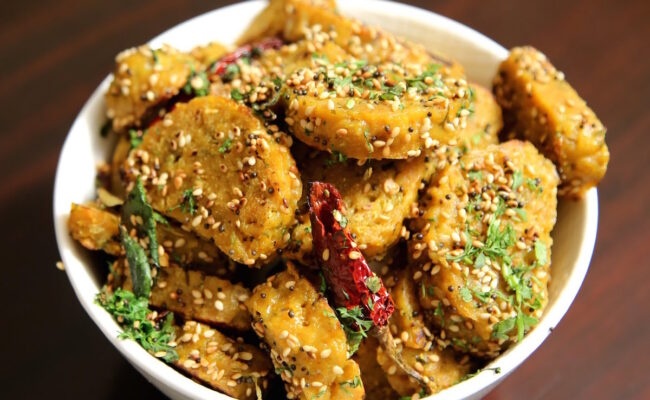
Gujarati food is more than just Dhokla. North Gujarat, Kacch, Kathiyawad and Surti Gujarat are the four major regions of Gujarat and each of these bring their own uniqueness to Gujarati cuisine. Dabeli, Kutch dabeli or double roti is a popular snack food originating in the Kutchof Gujarat. Dabeli literally means “pressed” in Gujarati. It is made with mixing boiled potatoes with a special masala and served with chutney, pomegranate and roasted peanuts. Fafda is a popular Gujarati snack. Fafda is usually yellowish in complexion. It is eaten with a chutney and salty fried-green chilis. Jalebi is sweet and crunchy making this sweet-savoury dish a favourite. Khaman is a food common in the Gujarat , made from soaked and freshly ground chana dal .The final touch to the soft and fluffy khaman is added with a garnishing of sesame seeds, mustard seeds, coriander leaves. It is a variant of Dhokla and has a lighter colour. Khichu is a dough for making papad made from rice flour, however, a few other flours are also used. The snack is prepared by cooking flour in water like porridge with cumin seeds and an alkaline salt known as Papad Khar.The name khichu is derived from the ductile nature of the dough. Khandvi consists of yellowish, tightly rolled bite-sized pieces and is primarily made of gram flour and yogurt. Khandvi is readily available across India and is commonly eaten as an appetizer or snack and is served with garlic chutney. Muthia is a staple of Gujaratis. The name is derived from the way it is made, from the ‘gripping’ action of the hand. Muthia assembles a shape of sausage. The inclusion of fenugreek makes Muthia good for bowel movement. Sev Tameta is made using juicy tomatoes served with heaps of besan sev. The gujrati version of the dish is a bit sweeter with the inclusion of jaggery.
Assam offers just the right kind of flavours to tickle your taste buds. With a wide variety of indigenous food to offer, Assamese food is famous for its distinct flavoring and influences. Delicious pork, chicken and mutton dishes are a must try. Baanhgaj or Lagot Kukura is essentially chicken cooked with bamboo shoots and lentil.The dish goes well with rice and it can be garnished with chopped green chillies and onions. Khaar is truly a unique Assamese preparation. Khaar is a heartwarming dish made with vegetables and pulses and the main ingredient being meat, fish or even duck. Even dried banana leaves which imparts burst of unexpected yet refreshing flavors. Lucchi is prepared by deep frying a roti made up of white flour, without making it crisp. It is served with a delicious potato curry. Lucchi is also known as Poori in other parts of the country. Masor Tenga is slow cooked fish with a broth made from outenga, tomatoes, and lemon and offers an extremely tangy refreshing flavour once done. Every Assamese definitely loves Masor Tenga. Payash is made using Joha rice and is loaded with ghee, dry fruits, and milk. Cooked on a low flame, one can also add cardamom and saffron for garnishing the dish. Overall, it is a must try dish for all those with a sweet tooth.
We use cookies to optimize your experience, analyze traffic, and personalize ads. Please choose whether you accept our use of non-essential cookies.
Read More
Cookies are small text files that can be used by websites to make a user\'s experience more efficient. The law states that we can store cookies on your device if they are strictly necessary for the operation of this site. For all other types of cookies we need your permission. This site uses different types of cookies. Some cookies are placed by third party services that appear on our pages.
Necessary cookies help make a website usable by enabling basic functions like page navigation and access to secure areas of the website. The website cannot function properly without these cookies.
Marketing cookies are used to track visitors across websites. The intention is to display ads that are relevant and engaging for the individual user and thereby more valuable for publishers and third party advertisers.
Preference cookies enable a website to remember information that changes the way the website behaves or looks, like your preferred language or the region that you are in.